Enterprise Translation
November 04, 2026
|
4 min read
WAF Lisbon 2026: Delighting Passengers Starts With Speaking Their Language
Delighting airline passengers starts with speaking their language. At the World Aviation Festival 2026 in Lisbon, LILT CMO Sabina Jasinska joined United Airlines and TAP Air Portugal to discuss segmentation, AI in marketing, and why multilingual personalization must run from booking through disruption to the contact centre.

Sabina Jasinska
Chief Marketing Officer, LILT
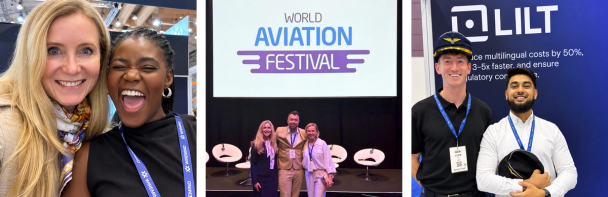
What a fantastic three days. The World Aviation Festival in Lisbon (13-15 October) brought together airlines, airports and technology partners for honest conversations about where the passenger experience is heading.
I came home with a full notebook and one belief stronger than ever: delighting your customers starts with speaking their language. Here's what we learnt, from my own panel with United Airlines and TAP Air Portugal and from the customer service sessions across the festival.
On stage with United Airlines and TAP Air Portugal
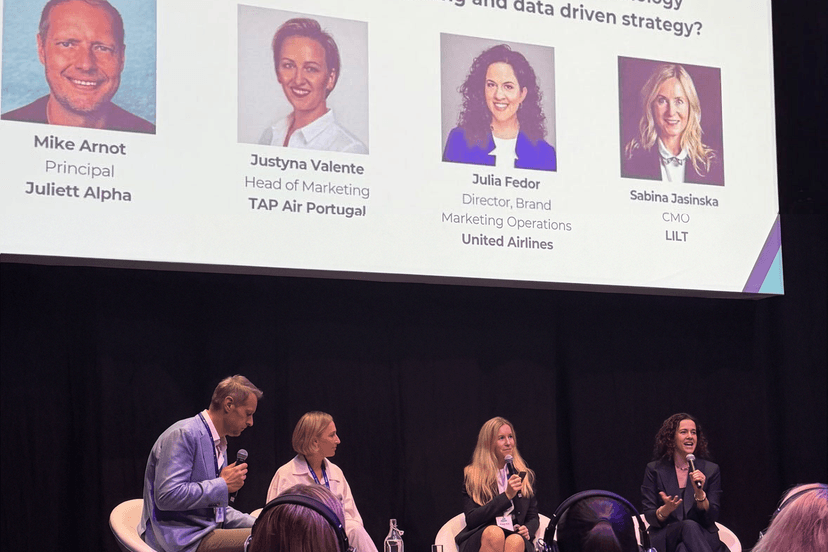
I shared the stage with Julia Fedor from United Airlines and Justyna Valente from TAP Air Portugal to talk about the best ideas in airline marketing right now. Three marketers, three very different businesses, and plenty of common ground.
Segmentation that follows the business. Justyna told us about a TAP project that fed load-factor data into digital advertising, putting more marketing pressure on emptier flights by origin and destination. It was very efficient, until TAP shifted from efficiency to maximising revenue. Fuller flights carry higher fares, so they deserved investment too. Her lesson: marketing technology should always follow commercial strategy.
AI behind the scenes. Julia explained how United has moved from people adjusting social media budgets by hand to AI tools that optimize spend in real time. United also uses contextual advertising, serving ads that fit what someone is already watching or reading.
Positioning depends on how well people know you. TAP is a household name in Portugal but far less known in the US, and that changes everything. Where the brand is less familiar, every sale costs more, so building awareness pays off in lower acquisition costs. United, which celebrated its 100th anniversary this year, has put the brand front and centre since COVID.
The power of TV. United's research shows that people need to see a TV ad five to nine times before they become more likely to choose United, or recommend it to friends and family. So the team aims for around six or seven exposures. Digital needs fewer, and frequency is watched closely so personalization never feels intrusive.
Creativity stays human. For one campaign, TAP produced more than 160 videos for different markets and saved around 70% of creative production time with AI. But Justyna was clear that the idea itself must be human, pointing to Alex Murrell's essay The Age of Average: when everything looks the same, nobody notices you. Julia agreed. Audiences crave human-made creative, so United uses AI to support its team, not replace it.
Serving what customers actually need. An airport guest asked how airports can help fill seats. The answer: understand that passengers are different. Frequent flyers want a fast, fully digital journey, while occasional travellers often want to speak to a person. Great service caters to both.
Why personalization starts with language
Personalization starts with language. A message has to reach the passenger in the language they speak, and it has to feel right for their culture. Everything else, from targeting to timing, only works once that is true.
We all know the creepy kind of personalization: you buy a toaster once and get toaster ads for the next six months. For us at LILT, real personalization starts with the language.
This matters for sales. According to CSA Research, 76% of people prefer to buy in their own language, and 40% won't buy from a website they can't read. I certainly wouldn't buy anything from a site in Thai. For airlines, it goes well beyond booking. Is in-flight entertainment available in your language? Does the film description match the subtitles you chose? Does the delay notification reach you in a language you understand? These are the customer touchpoints where understanding quietly breaks down. Before the festival we mapped where language breaks across the passenger journey, from seatback catalogues and subtitles to chatbots and disruption notices. Lisbon was three days of hearing airlines describe the same thing from the inside.
Then there's cultural adaptation, or transcreation. Years ago, I worked on first-class messaging for Air France. We wrote completely different letters to sell the same seat: elegant but factual for French customers, twice as long and full of courtesy for Chinese customers. Translating everything into every language used to be too expensive. Now, with AI translation and human experts checking what matters, it's possible at scale.
The newest challenge is the rise of AI search. More and more travellers ask for travel advice using Gen AI tools instead of browsing your website, and they rarely click through to check the source. If that answer is based on your old baggage policy, the problem shows up at the airport. Air Canada has already been held responsible for what its chatbot told a passenger.
And fewer than 20% of people on the planet speak English. They will ask in their own language. That means your policies, FAQs and service information need to be clear, consistent and current in every language, for people and for AI agents alike.
What we learnt about airline customer experience at WAF Lisbon
The strongest theme across the customer service sessions was completing the passenger's whole journey: solving the problem, keeping the context and helping staff act sooner. Every one of these ideas comes back to language.
- Resolve the request, don't just answer it. Air Europa showed how passengers can book flights, change reservations and buy extras within WhatsApp. Pegasus Airlines talked about what goes wrong: context disappears between interactions and staff have to start again after an AI handover. If a passenger switches language, or an agent picks up in another language, that context must travel too.
- Answer before they ask. Sofia Lufinha, Chief Customer Officer at TAP Portugal, said that around 30% of contact-centre calls are about pre-flight information such as visa requirements. Sending the right information after booking removes the need to call, but only if the passenger can understand it. That is a helpdesk and support content problem as much as a contact-centre one.
- Disruption is where loyalty is won or lost. Ada's Mike Murchison led a discussion on AI-led rebooking, and 15below demonstrated booking-aware self-service and more personal disruption messages. When a flight is cancelled, people are stressed. Clear options in their own language make all the difference.
- Remember the passenger at every touchpoint. The One Memory, Every Touchpoint session with United Airlines was about context following the traveller from app to airport, gate and onboard. A passenger's preferred language is one of the first things worth remembering.
- Keep the human touch. Virgin Atlantic's Bethan Lynch positioned AI as a way to remove friction, while people bring trust and emotional connection. Jerry Angrave of Empathyce added that premium service has to be consistent from booking to the aircraft door. The same balance applies to multilingual voice AI in customer service.
- Test your AI properly. TestSolutions explained how they test airline chatbots with curated questions, verified answers and expert review, because a plausible answer about refunds or baggage can still be wrong. That testing has to happen in every language you serve, not just English.
Delighting your customers starts with speaking their language
Excellent customer service and delighting your customers come down to one thing: making every passenger feel understood. That starts with the language, on your website, in your app, in AI answers, in the contact centre and on board.
At LILT, we help enterprises create and translate content in more than 100 languages, combining AI with agent verification and human experts who check everything that matters. If you're thinking about how to serve every passenger in their own language, we'd love to talk.
A big thank you to the World Aviation Festival team, to Julia and Justyna for a brilliant conversation, and to everyone who came to say hello after the panel. See you next year!
Share this post


Find some time with LILT
Enterprise-grade content seamlessly translated with AI to help your business scale globally.
Book a MeetingShare this post