Enterprise Translation
June 21, 2026
Game Localization
In a games market projected to reach $396.2 billion, shipping an English-only title leaves money on the table. Game localization is what separates a title that resonates with global players from one buried under bad reviews outside its home market.

LILT Team
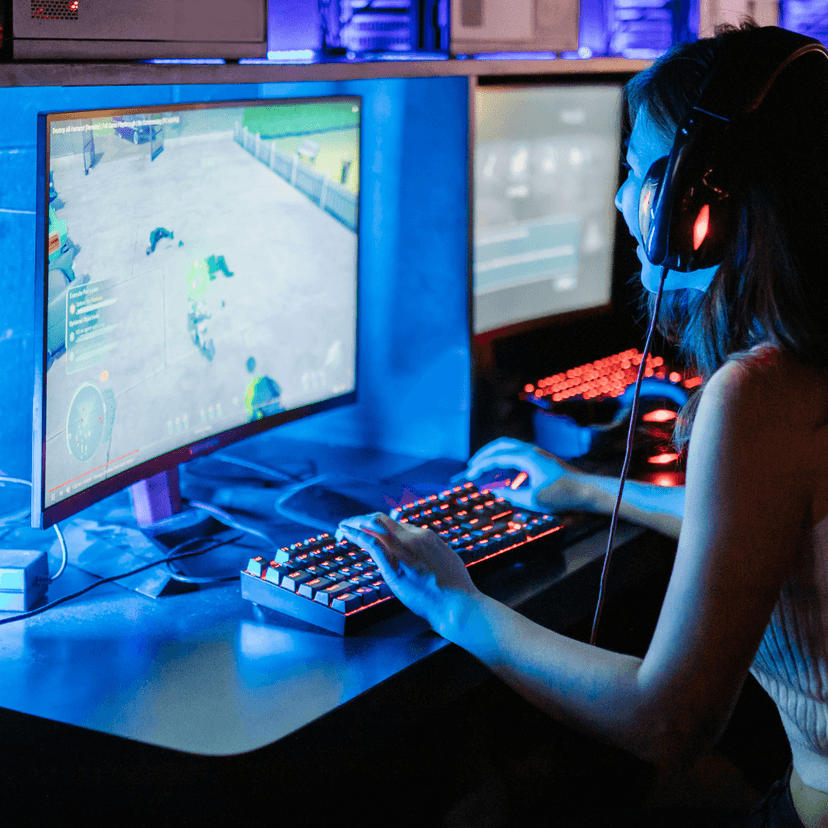
With so many games competing for attention in a market that was expected to reach $396.2 billion, shipping an English-only title is leaving money on the table. Game localization is the difference between a game that resonates with global audiences and one that gets buried under negative reviews in every region outside your home market. This guide covers everything from early planning and cultural adaptation to AI-powered workflows that keep every language in sync.
Key Takeaways
- Video game localization is an ongoing, cross-team process that goes far beyond simple translation-it involves modifying text, audio, art assets, and gameplay elements to make a game feel native in every market.
- Localization drives measurable revenue: only 32.33% of Steam users list English as their main language, and there are more than 3 billion video game players worldwide. Ignoring these audiences means ignoring the majority of your potential customers.
- Modern game localization services must support continuous localization, broad file formats, and shared linguistic assets like glossaries and translation memories to keep every language in sync across patches, DLC, and sequels.
- AI-powered platforms like LILT combine adaptive machine translation with human linguists to handle frequent game updates while maintaining quality-AI translation can deliver translations in about 2 days for time-sensitive content.
- This article provides practical checklists for choosing a game localization partner, preparing your code and game content, and avoiding cultural missteps that can damage your reputation in a new region.
What Is Video Game Localization?
Video game localization adapts every player-facing element of a game-text, audio, visuals, user interfaces, and cultural references-so the experience feels as though it was originally created in the player's native language. Localization ensures the game feels native and culturally relevant to players, regardless of where they live or what language they speak.
This goes well beyond swapping words from one source language to a target language. Full localization translates all game assets and records voice-overs in the target market's language. Partial localization translates text but not voice-over files. Box and documentation localization translates only manuals and packaging. And no localization releases games with little to no translation effort-a risky move for anything beyond a hyper-niche title.
The localization process spans in-game dialogue, UI strings, tutorials, subtitles, cut scenes, store descriptions, patch notes, marketing sites, and support content. For live-service video games, localization is continuous: it evolves with every update, event, and seasonal release rather than being a one-time project at the end of game development.
If you need a reminder of what poor translation looks like, consider "All your base are belong to us" from the English version of Zero Wing-a line so awkward it became a meme. These errors may be funny in hindsight, but they break immersion and credibility with your target audience.
Why Game Localization Matters for Global Revenue and Player Experience
The video game industry generates staggering revenue. The global games market brought in roughly $182.7–187.7 billion in recent years, with forecasts pushing past $188 billion and more than 3.58 billion players worldwide. Proper localization enhances player immersion and experience-and increases revenue by reaching wider global markets.
Here is what the language landscape actually looks like:
- Only about 32.33% of Steam users list English as their main language. Simplified Chinese accounts for roughly 23%, with Russian, Spanish, Portuguese, German, and Japanese making up significant shares.
- 64% of top gaming websites receive over half their traffic from foreign countries.
- Over 60% of Steam users browse in a language other than English, and Steam's algorithm penalizes English-only store pages in non-English markets.
Localizing into key markets like Mandarin Chinese, Russian, Brazilian Portuguese, and Spanish can transform a niche PC or mobile game into a global hit. In 2017, PUBG localized in 12 languages and became a global success-a clear example of localization efforts paying off at scale.
On the flip side, bad localization damages reputation. Hollow Knight: Silksong received "very positive" overall reviews on Steam, but Chinese user reviews dropped to "mixed" due to localization complaints. Strong localization also improves retention, session length, and monetization by making gameplay, narratives, and store interfaces effortless to understand. Localization can significantly enhance a game's success and reputation-or destroy it.
Core Elements of High-Quality Video Game Localization
Quality localization is a multidisciplinary job combining linguistics, design, engineering, and QA. No single team member can cover all of it alone-localization teams must coordinate across disciplines.
Linguistic quality. Translators adapt dialogue while maintaining the original intent and tone. A style guide keeps character voices, humor, and lore consistent. Aim for consistency in terminology across all game content, from item descriptions to achievement names to system messages. Provide context to translators for accurate localization-without screenshots, character backgrounds, or gameplay captures, even skilled professional translators can misinterpret meaning.
Cultural adaptation. Cultural adaptation adjusts humor and references for local audiences. Localized games require adapting marketing materials to resonate with target audiences, not just translating them word for word. Localization should consider cultural norms and references-what works in one culture may confuse or offend in another.
Technical readiness. Technical integration adjusts UI layouts and formatting for different languages. The development team must support multiple file formats, build pipelines that handle localized content, and ensure cross-platform consistency across PC, console, and mobile.
Voice and audio. Localization often requires casting local voice actors for authenticity. A localized version with dubbed audio in the player's native language creates far deeper immersion than subtitles alone, especially for narrative-driven games.
Shared linguistic assets. Translation memory helps achieve consistency over time in localization. Glossaries, style guides, and translation memories keep terminology and character voices aligned across updates, DLC, and sequels.
Most games require different localization approaches for different text types. UI labels need concise, unambiguous wording. Dialogue trees need emotional nuance. System messages need clarity. Working with native-language translators who are also familiar with genre-specific vocabulary-RPGs, MOBAs, shooters, visual novels-makes the difference between a localized version that feels authentic and one that feels mechanical.
Designing Games That Are Localization-Ready
Internationalization means planning for localization during the early stages of game development so you are not retrofitting support for other languages close to release. Localization is now integrated in the early stages of game development at studios that take global markets seriously.
Separate content from code. No hard-coded strings. Use resource files (.json, .xml, .csv, .resx, .po) and adopt a consistent key naming scheme. Developers need to prepare code for different writing systems and text lengths-this means supporting non-Latin scripts such as Chinese, Japanese, and Korean, as well as right-to-left languages like Arabic.
Plan for text expansion. German localization often faces screen space constraints due to text length-German and French translations commonly expand 30–35% beyond English. Design user interfaces with flexible layouts that accommodate this without truncation. Use language locales instead of flags for language representation in your UI.
Organize assets cleanly. Keep dialogue spreadsheets, subtitle scripts, and UI string tables well structured for export into a localization platform. This organization directly determines how fast localization teams can work.
Avoid technical pitfalls. Concatenated strings (e.g., "Welcome " + userName + "!") break grammar in many languages. Missing placeholder variables, untranslated strings, and lack of pluralization rules cause bugs that are expensive to fix later. Build a localization kit-a package of context files, screenshots, and asset references-early and keep it updated. The development team should run localization readiness audits before the first batch of strings goes out.
Managing Cultural, Legal, and Regulatory Adaptation
Cultural and legal adaptation is as important as language accuracy for international releases. Cultural references can lead to significant localization challenges, and localization can require significant changes to fit cultural sensitivities.
Cultural changes in practice. Character names, storylines, visual symbols, and humor may all need adjustment. The game puck man was renamed to Pac-Man for Western markets to avoid vandalism of arcade cabinets. "Honor of Kings" became "Arena of Valor" for its Western release with redesigned characters and rewritten dialogue. These cultural changes are not optional-they determine whether a game resonates in each target market.
Regulatory compliance. Localization includes compliance with local laws and regulations. Age rating systems differ by region-ESRB in North America, PEGI in Europe, CERO in Japan. Germany has historically censored certain imagery. Games may be banned in China for violating censorship rules around political content, gambling, or religious symbols. South Korea has its own regulatory requirements around gameplay mechanics and monetization.
Handling sensitive themes. Religion, politics, historical events, and cultural taboos require local experts and native-language reviewers to evaluate risk. For the japanese version of a game, for instance, content that is acceptable in Western markets may need to be adjusted for different regions.
Practical steps. Create a content risk matrix by market. Document every required change. Ensure that your build system handles variant assets per locale cleanly-different textures, names, and dialogue branches should be managed through version control, not manual swaps.
How Modern Game Localization Services and Platforms Work
Traditional localization relied on email, spreadsheets, and manual file handoffs between studios and vendors. Modern game localization services use one centralized platform to connect build systems, content repositories, and game engines-automating file handoffs, status tracking, and quality checks.
A centralized platform like LILT connects directly to your content sources. New strings flow automatically from source control or CMS into the translation process, through review, and back into builds without manual copy-paste. Project managers get real-time visibility into progress across every language, and localization teams work within shared linguistic assets and role-based access.
The difference is tangible. Manual workflows lead to version mismatches, untranslated strings, and delays. Integrated TMS workflows reduce errors, compress turnaround times, and give every team member-developers, narrative designers, translators, and QA-a single source of truth.
Evaluating Game Localization Service Providers
Before picking a vendor or platform, localization managers should define clear evaluation criteria:
- Integration capabilities: Support for Unity, Unreal, Git, and your build pipelines. The provider must handle your software ecosystem without requiring custom workarounds.
- File format support: Common game file formats (.po, .json, .resx, .xml, SRT, VTT) and the ability to scale from 5 languages to 20+.
- Turnaround for live ops: Hotfix and seasonal content demands fast response times. Speed must not compromise localization quality.
- Collaboration and context: How well does the provider work with your team? Access to visual context, gameplay captures, and build notes is essential for translators working on game content.
- QA and testing support: Functional, linguistic, and compliance testing on real target devices. Not just checking translated text in a spreadsheet, but verifying it in play.
AI and Machine Translation in Game Localization
Rising content volume, seasonal events, and player communications make machine translation unavoidable in modern video game localization. Localization delays often occur due to multiple language translations, and AI-powered workflows directly address this bottleneck.
Machine translation is raw engine output without human review-useful for first drafts but not ready for players. AI Human Translation combines machine translation with expert human validation, delivering quality that matches fully human workflows at a fraction of the time.
Platforms like LILT combine adaptive machine translation, large language models, and translation memories to pre-translate repetitive content such as menus, patch notes, and support articles. CAT tools integrated into the platform give translators in-context views of the game, reducing errors. For flagship storylines and character dialogue-content that requires transcreation-human-led localization with AI assistance delivers the best results.
Adaptive MT is what sets modern platforms apart: the engine learns in real time from linguists' corrections, improving quality for specific games, franchises, and terminology over time. The tangible benefits include reduced turnaround from weeks to days (AI translation can deliver translations in about 2 days), lower per-word costs, and better consistency across games in the same universe.
Building a Continuous Localization Workflow for Live Games
Continuous localization means running localization in parallel with development and release cycles rather than treating it as a final stage. For live-service games with frequent patches, events, and seasonal content, this practice is non-negotiable.
Connect content sources-game repositories, narrative scripts, app store metadata, marketing websites-to your localization platform so new strings are captured automatically. A typical workflow looks like this:
- String extraction from source control
- Automated routing to language teams
- In-context translation using CAT tools
- Review by senior linguists
- Linguistic QA with automated checks
- Import into nightly or weekly builds
Sim-ship localizes games before the original release to prevent piracy and ensure all markets launch simultaneously. For post gold content and ongoing game updates, batch updates for lower-priority content and on-demand translation for high-visibility content (event announcements, hotfixes) keeps things moving without overwhelming your team.
Track translation velocity, quality metrics, term adherence, and language coverage reports. These analytics help localization managers plan future release cycles and allocate budget where it has the most impact.
Maintaining Consistency Across Updates, DLC, and Sequels
For long-running franchises and live-service games, consistency in terminology and character voice is vital to player trust. Shared linguistic assets-translation memories, glossaries, and style guides-should be managed centrally and reused across DLCs, expansions, and sequels.
When game mechanics or items change, update glossaries and ensure changes propagate automatically to translators and reviewers. Platforms like LILT provide real-time concordance searches, term enforcement, and automated QA checks that catch inconsistent terminology before release.
Even if multiple agencies or internal teams work on different components, a single centralized platform keeps all languages aligned. This is especially critical for translation studies around applied linguistics principles, where consistency in the localize process directly affects player perception.
Testing and QA for Localized Video Games
Localization QA is as critical as core gameplay QA and should be planned into the same test milestones. Testing localized versions is crucial before game release-skipping this step is how broken text and misaligned subtitles reach players.
Localization quality assurance reviews the game in the context of the target market. There are three distinct layers:
QA Layer
What It Covers
Example Issues
Linguistic QA
Spelling, grammar, style, tone
Wrong register for character, inconsistent item names
Functional QA
UI layout, string length, placeholders
Truncated labels, overlapping text in French or Spanish menus
Compliance QA
Rating board requirements, legal text
Missing age rating, restricted content visible in regulated market
Localization teams test for bugs such as untranslated strings and subtitles out of sync. In-context testing means reviewers play localized builds on target devices, checking how text and audio appear during real gameplay scenarios-not just reading strings in a spreadsheet.
Use screenshots, video captures, and bug-tracking tools to document issues efficiently, linking defects back to the original strings in the localization platform. A release readiness checklist should cover all localized content types: store pages, tutorial videos, community announcements, and support macros-not just in-game text. Verification successful for localization means every piece of content, in every language, has been reviewed in context.
How LILT Supports Scalable Game Localization Programs
LILT is an AI-powered translation and localization platform that helps game studios and publishers ship multilingual content faster without sacrificing quality. It is built for the pace and complexity of the video game industry, where game developers ship frequent updates across dozens of languages.
LILT's adaptive AI learns from each translator's edits in real time, improving machine translation output for specific game titles, genres, and franchises. This means the platform gets smarter the more your team uses it-delivering increasingly accurate suggestions for your game's specific terminology and tone.
Relevant platform capabilities for video games include:
- Integrations with content management systems and development tools
- Support for common game file formats
- Terminology and style guide management in one centralized platform
- Analytics dashboards for tracking quality, velocity, and coverage
- A network of professional translators-many with gaming specializations-who work within the platform to deliver translations that feel native and preserve lore and character voices
If you are shipping a game to a new region or scaling from five languages to twenty, consider running a pilot project with LILT to see how an AI-powered workflow can lead to faster, higher-quality localization for your next global launch.
Frequently Asked Questions About Game Localization
This FAQ addresses common practical questions about game localization that go beyond what the main article covers, focusing on implementation details, budgets, and timelines.
How early should we start planning localization for a new video game?
Localization planning should begin during pre-production or early production, when narrative scope, UI frameworks, and technical architecture are taking shape. Starting this early allows your team to avoid hard-coded strings, design flexible interfaces for text expansion, and identify which markets and languages will shape content choices. Platforms like LILT can be integrated well before the first localization batch so pipelines are tested on UI prototypes and early narrative samples. This is how you prevent the expensive rework that comes from treating localization as a respond ray id-a last-minute emergency rather than a planned process.
How many languages should we localize into for our first global launch?
The right number depends on genre, platform, and budget. Many studios begin with a core set-English, French, Italian, German, Spanish-plus one or two Asian languages like Japanese or Simplified Chinese. Use player data, wishlist locations, and platform analytics (such as Steam or mobile store stats) to prioritize languages with the highest potential ROI for your target audience. Pilot a smaller set of different languages for the initial release, then expand based on adoption and revenue performance in each region.
What does a typical game localization budget include beyond per-word translation costs?
Budgets should account for translation, editing, and review, plus voice-over recording where needed, linguistic and functional QA, tool or platform fees, and project management. Additional costs can arise from reauthoring art assets, adapting marketing campaigns for each target market, and performing compliance testing in heavily regulated markets. Using an AI-powered platform like LILT can reduce long-term costs by reusing translations via translation memory and accelerating turnaround for repetitive content. Think of security service fees and security infrastructure as part of the cost if your localization pipeline handles sensitive pre-release content-protecting against malicious bots and leaks matters.
Can we rely only on machine translation for our video games?
Fully automatic machine translation is usually not sufficient for narrative-heavy content, character dialogue, or humor, because these require human judgment and creativity. A hybrid approach works best: use machine translation to pre-translate suitable content such as system messages, patch notes, and support articles, then have human linguists review and correct it. For flagship storylines, cinematic scripts, and brand-critical text, human-led localization with AI assistance delivers the best player experience. Translation studies and applied linguistics research consistently confirm that cultural context, tone, and creative intent require a human in the loop.
How do we measure whether our localization is successful?
Track both quality and business metrics. On the quality side, monitor player reviews in each language, support ticket volumes related to confusion, and bug counts for localization issues. On the business side, watch engagement and monetization signals: session length, conversion rates in localized stores, and retention curves by language region before and after localization improvements. Use platform analytics-such as those in LILT-to monitor term consistency, error rates, and turnaround times, then correlate those with regional game performance. The world of game localization measurement is becoming more data-driven, and studios that track these numbers make smarter decisions about where to invest next.
Share this post


Find some time with LILT
Enterprise-grade content seamlessly translated with AI to help your business scale globally.
Book a MeetingShare this post